
Tifton, GA |
The 2025 cotton season may be in the rearview mirror, but many of the challenges growers faced are already carrying over into this year. One of the biggest concerns now on the radar is a relatively new pest in Georgia — the cotton jassid.
First detected last growing season, the insect quickly made its presence known across the state, leaving behind noticeable damage and raising questions about how to manage it moving forward.
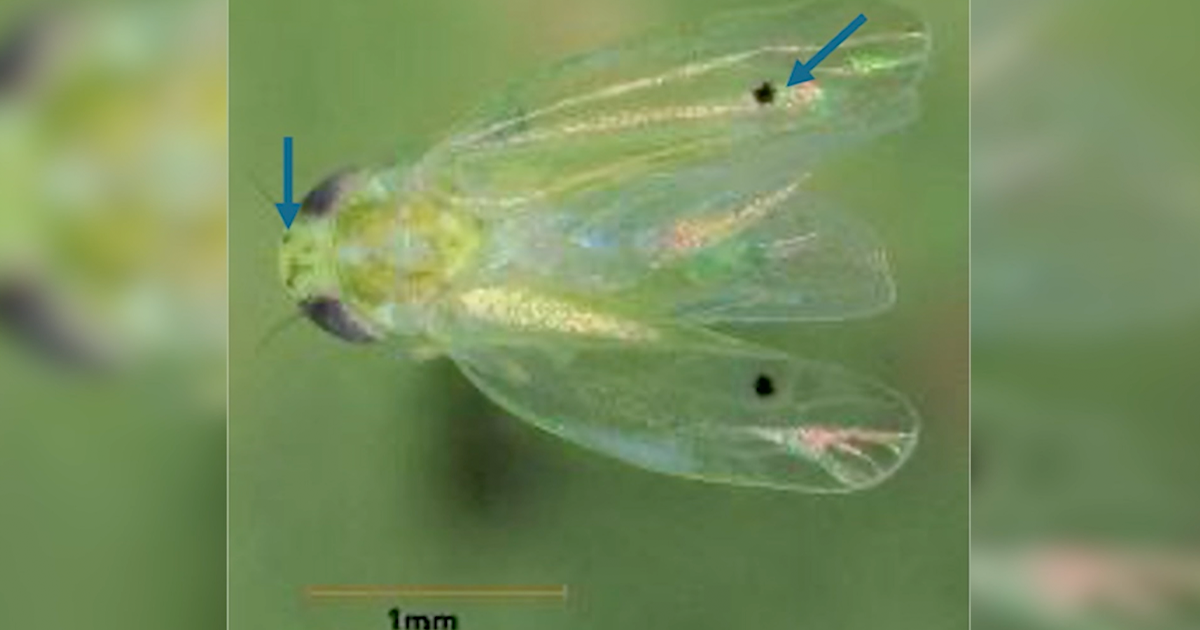
“It’s a small leaf hopper, so it has sucking mouthparts, and it feeds on multiple species of plants. But cotton is a preferred host,” said Phillip Roberts, Extension Entomologist with the University of Georgia. “When the jassid feeds on the cotton, it actually injects a toxin during the feeding process. And the injury we see — the yellowing of the leaves, the hopper burn, the reddening — that is a plant response to the toxin.”
Damage That Impacts Yield
That feeding damage does more than just affect the appearance of the plant — it directly impacts its ability to produce.
“As these leaves react to the toxin and turn yellow and ultimately red, the capacity of that leaf in terms of photosynthesis goes down,” Roberts explained. “So we see limited production in terms of yield. The plant is simply not functioning at its full capacity due to the injury from the jassid.”
With photosynthesis reduced, the plant struggles to develop properly, ultimately leading to yield loss — something growers can’t afford in an already challenging economic environment.
Rapid Spread Across the State
What made the cotton jassid particularly concerning last year was just how quickly it spread.
“It’s just amazing how fast this insect spread across the state of Georgia,” Roberts said. “Basically, every cotton-producing county in the state, we detected jassids in those counties — including areas in northwest and northeast Georgia.”
That rapid expansion left little time for producers to react, making early detection and monitoring even more critical heading into the 2026 season.
Monitoring Populations Ahead of the Season
Researchers are now closely tracking jassid populations during the offseason, using tools like sticky cards — commonly used for whitefly scouting — to better understand how well the pest survived the winter.
“We’re continuing to look at those over the winter,” Roberts said. “We’re optimistic the winter temperatures have impacted jassid populations, but we don’t know how much. We’ve caught one jassid in the last month on a sticky card. I hope that’s the last one — but probably not.”
As temperatures begin to rise, scouting efforts will intensify.
“As we move into March and April, we’re really going to ramp up our scouting,” he added.
Added Costs in an Already Tight Market
Beyond the agronomic challenges, the cotton jassid also presents a financial concern for producers already dealing with tight margins.
“It’s a concern from the producer standpoint and the overall industry standpoint,” said Taylor Sills, Executive Director of the Georgia Cotton Commission. “Georgia farmers added about thirty dollars per acre to their bottom line last year just dealing with this pest — and there’s no room for that with where cotton prices are today.”
Sills says the concern goes beyond just cost.
“We don’t want to build resistance. We don’t want to add cost. We don’t want to add extra trips to the field,” he said. “So it’s a very concerning situation.”
As growers prepare for the upcoming season, the cotton jassid remains a key issue — one that could once again test both their management strategies and their bottom line.
By: John Holcomb