
Watkinsville, GA |
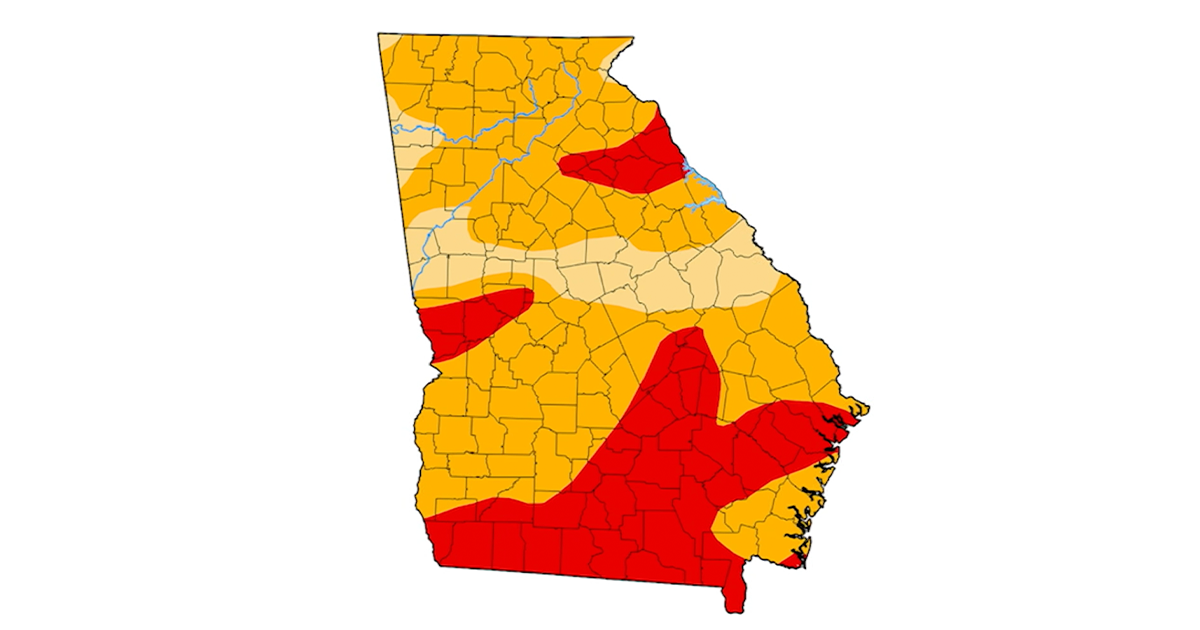
Over the past several months, drought conditions have tightened their grip on every corner of Georgia. According to the latest drought monitor data, every county in the state is experiencing some level of drought, with more than thirty percent classified in level three or four conditions.
For agricultural climatologist Pam Knox, this dry stretch didn’t appear overnight.
“You can go back to last summer to see where the drought really kind of got its roots,” Knox said. “And, we had a lot of rain early in August. There are some places not too far from here that got ten inches in just a few days. And after that the heavens stopped and we got much drier. Because the temperatures are pretty warm. We had no rainfall from tropical systems at all, which is unusual for Georgia. And so, we have gone into these just dry conditions, and they’ve been very persistent over the winter.”
A Critical Time for Soil Moisture
What makes this drought especially concerning isn’t just the lack of rainfall — it’s the timing.
Winter is typically when Georgia’s soil moisture reserves recharge ahead of spring planting. With cooler temperatures and dormant plants, evaporation is low and moisture has time to build.
“Usually winter is the time of year when we’re recharging our soil moisture because the plants are dormant for the most part,” Knox explained. “And because it’s so dry, we don’t have those reserves there. You know, for people who are going to try to plant in the spring, if you don’t have any moisture, it’s hard to get those seeds to germinate. So that’s a concern.”
Without those reserves, crops emerging from dormancy will quickly use whatever limited moisture is available. If another dry spell develops in the spring, producers could find themselves with little margin for error.
“Once the plants come out of dormancy and start growing, they’re going to use up every bit of soil moisture and whatever rainfall we get,” Knox said. “And so if we would go into a dry spell in the spring which could happen, there’s no reserves.”
Early Crops Feeling the Pressure
Later-planted crops such as cotton and peanuts may not yet feel the full impact. However, earlier-planted crops are already under strain.
“I think one of the problems is going to be having enough soil moisture for seeds to germinate,” Knox said. “So for anybody who’s planting seeds this time of year would probably be more likely corn… Right now the forage is probably and winter grains are probably the biggest things because they’re going to be coming out of dormancy pretty early and the farmers are going to really need that for their cattle.”
Corn, winter grains, and forage crops are particularly vulnerable, as they depend on adequate early-season moisture to establish strong growth.
Watching the Forecast Closely
There have been some recent signs of rainfall returning in scattered patterns, offering a glimmer of hope. Still, Knox cautions that consistent and widespread moisture will be needed before producers can breathe easier.
“We are seeing a pattern where we’re getting rain coming more often than it was, which is good,” Knox said. “So, I think farmers that are worried about soil moisture are going to have to watch that carefully, watch the weather to see when they’re going to have the wetting and hope that it hits their areas.”
With soil temperatures beginning to rise — especially in South Georgia — planting season is fast approaching. But Knox emphasizes that moisture must guide those decisions.
“You have to couple that with the idea of how much moisture there is for the seeds,” she said. “And you don’t want to put stuff into the ground if it’s not going to germinate.”
As Georgia farmers look toward spring, careful timing and close monitoring of weather patterns may be just as important as ever.
By: John Holcomb