
Social Circle, GA |
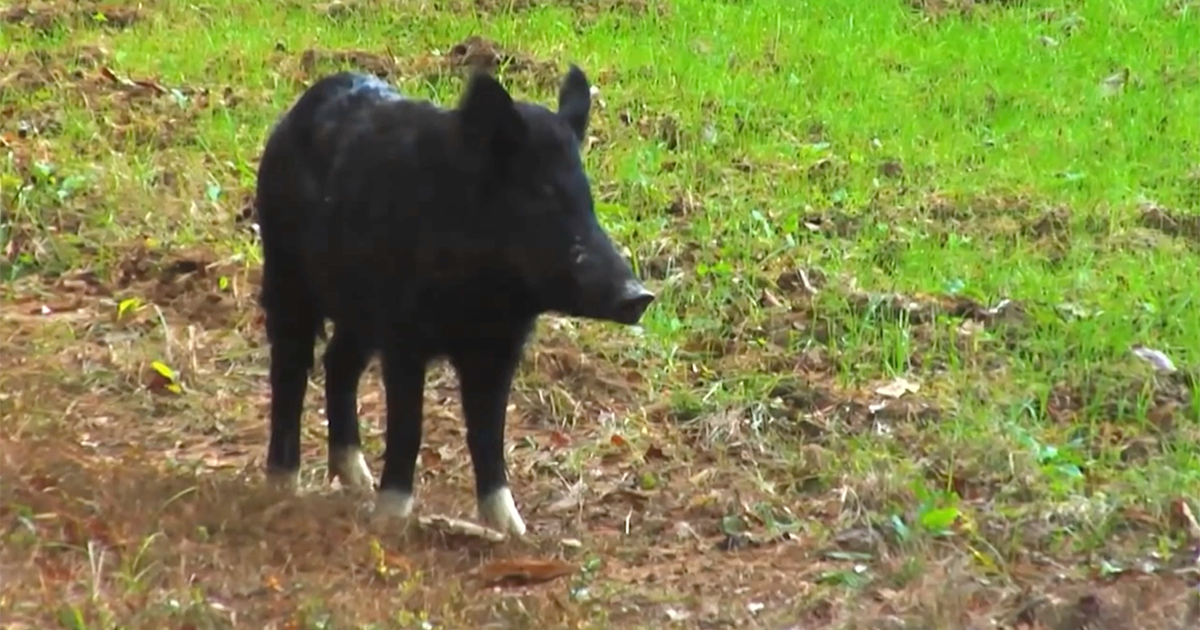
They cause an estimated $150 million in damage to Georgia agriculture every year — destroying crops, tearing up land, and wrecking equipment. And despite ongoing control efforts, feral hogs aren’t going anywhere. If anything, their populations are growing.
“Feral hogs cause a tremendous amount of damage, especially for agricultural producers. They destroy row crops, root up the ground, and can cause damage to equipment — it’s an ongoing, perpetual problem that we’ve had for really centuries,” said Charlie Killmaster, Wildlife Biologist with the Georgia Department of Natural Resources. “They reproduce especially well. They can drop multiple litters a year with a lot of young in each litter, and those young have a really high survival rate. That reproduction outpaces the harvest in a lot of cases.”
Because of that, feral hogs remain a top priority for agricultural and wildlife departments across the state — and collaborative efforts are expanding to give growers more tools to fight back.
“For years, we’ve been actively working on removing regulations and restrictions on hunting and controlling feral hogs,” Killmaster said. “We’re also running the Hogs Down Awards program, where we’re giving away highly efficient hog traps to people who are actively out there controlling hogs on a quarterly basis. And we’re offering technical guidance through various workshops to teach people how to effectively trap and remove feral hogs.”
State legislators have also taken notice, with recently passed legislation making it easier to control feral hog populations on private lands.
“House Bill 946 legalizes the use of drones for searching for feral hogs to aid control efforts, which will help us gain some efficiency there,” Killmaster said. “It also legalizes hunting from a vehicle on private property and on private roads — not from a public road. That was previously allowed through a permit, but this removes that permit requirement. It also clarifies the licensing requirements, making clear that you do not need a hunting or trapping license in order to trap feral hogs.”
With seeds already in the ground for some of the most vulnerable crops — including peanuts and corn — growers should be on high alert for feral hog activity. But according to Killmaster, the best time to address the problem has already passed, which means getting ahead of it before next winter is critical.
“It’s best to do it in the dead of winter when there’s not a lot of natural food out there. They respond really well to bait in the trap, and that’s the time to get to them,” Killmaster said. “Once there’s spring green up and crops growing, they are really hard to bait and get coming into a trap.”
For Georgia’s agricultural producers, staying proactive — through trapping, reporting, and taking advantage of new programs and legal tools — remains the most effective defense against one of the state’s most persistent and costly invasive species.