
Tifton, GA |
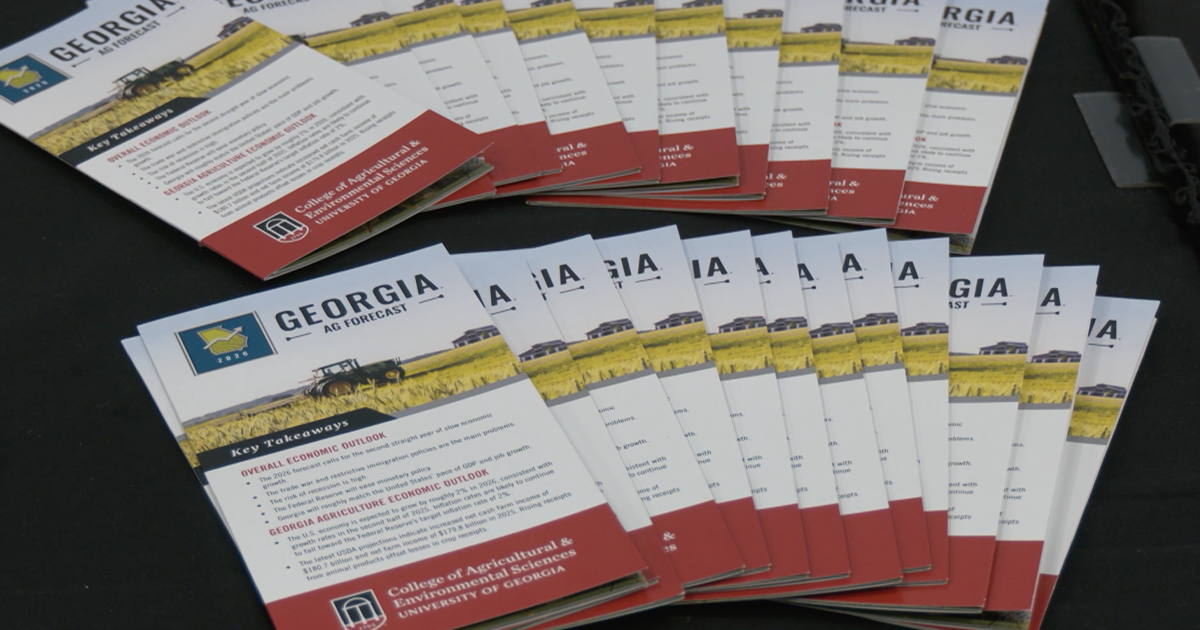
In an effort to equip the agricultural community with insights and data heading into a new year, leaders from across Georgia recently gathered in Tifton for the annual Georgia Ag Forecast Meeting. Hosted by the University of Georgia, the event brought together producers, policymakers, lenders, and researchers to discuss the challenges and opportunities farmers are likely to face in 2026.
“The reason we like to do this is to bring together producers, legislators, lenders, people from the community to really give them a picture about what’s going on in agriculture,” said Nick Place, Dean of the University of Georgia College of Agricultural & Environmental Sciences. “And also, to give some projections about what we see into the future. It’s important that we give them information they need so they can make wise and the best decisions in regard to increasing agriculture production and minimizing those costs.”
That information will be vital as producers attempt to climb out of the economic hole created by volatile market conditions. While numbers from 2025 show an increase in net farm income, those figures can be misleading due to the nature of what’s included.
“In 2025, we saw a big increase in government payments. We also saw an increase in livestock receipts. So, the net farm income numbers went up,” said Ford Ramsey, Agricultural Economist at UGA. “But that’s hiding the situation that we’re seeing in most of the crop markets, which is a pretty significant cost-price squeeze.”
That squeeze is expected to continue into 2026, with lingering concerns around trade and livestock disease presenting potential threats to producers’ profitability.
“I think the main uncertainty in 2026 is going to be primarily related to international trade,” said Ramsey. “If we have any major disruptions, that could certainly affect some major commodities in Georgia. Poultry would be one. Cotton would be another. Also, livestock disease… If those start to spread, that could have a big impact.”
But it’s not all about economics. Another major theme at the meeting was improving the public’s understanding of agriculture and the role it plays in their daily lives.
“We have to do a better job of telling the story of agriculture, where food comes from,” said Place. “There are so many people that take that for granted and do not really understand everything that it takes to get something from the animal or the plant onto the table. We need to do a better job of telling that story.”
By: Damon Jones