
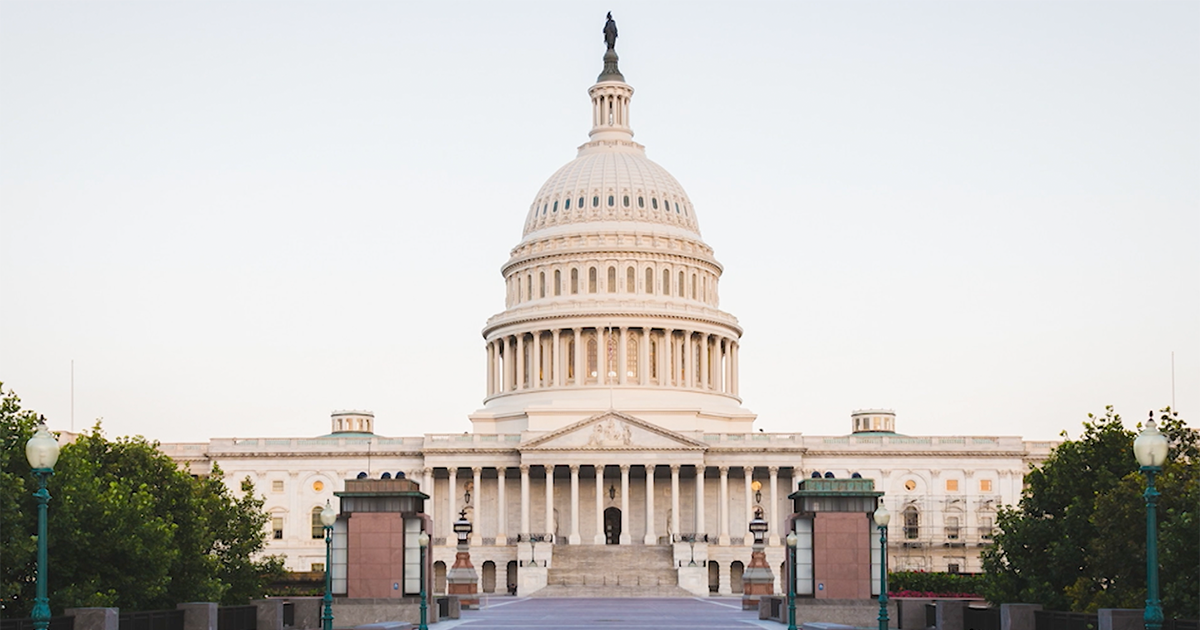
Washington, DC |
Some of Georgia’s top agricultural leaders recently traveled to the nation’s capital to advocate for the industry and share their concerns directly with lawmakers. The visit was part of the annual Georgia Farm Bureau President’s Trip to Washington, an opportunity for farmers and industry leaders to speak firsthand about the challenges facing agriculture.
For those involved, the trip offers a powerful way to communicate the realities of farming to policymakers.
“This is really the best time and one of the more effective ways to communicate our message,” said Ben Parker, National Affairs Coordinator with Georgia Farm Bureau. “To have people that live and breathe agriculture and make a living from farming every day — to hear their personal stories, the challenges, and even the joy they get from farming — it really means a lot.”
Farmers Share Real-World Challenges
For many producers, the goal of the trip is simple: make sure lawmakers understand how difficult the current farm economy has become.
“I think it’s very important because we really want to be able to give our information to those legislators,” said Cory Tyre, Vice President of Bacon County Farm Bureau. “They need to know how tough it is and how hard it is to operate a farm in the current conditions.”
Tyre says the number of farms has already been declining, and without meaningful changes, that trend could accelerate.
“We’ve lost so many farms in the last several years,” he said. “And we’re going to lose a lot more if something doesn’t change soon.”
A Critical Moment for the Farm Bill
The timing of this year’s trip was especially significant, as lawmakers in Washington began the first markup discussions for the long-awaited Farm, Food and National Security Act, commonly known as the Farm Bill.
“They were supposed to have a markup scheduled a little earlier,” Parker explained. “And we told them, you know what, we’re not quite here yet. So why don’t we delay until we get here. So the timing was fantastic.”
That timing allowed Georgia Farm Bureau leaders to meet directly with members of Congress while the legislation was actively being discussed.
“It gives every one of our county presidents and committee members the opportunity to get in front of their delegates, their House members and senators, and really stress the issues,” Parker said.
A Wide Range of Voices Representing Agriculture
The delegation included farmers representing different commodities, regions, and generations — something participants say is crucial when discussing agricultural policy.
“That’s so valuable,” said Kaitlyn Marchant, President of Oglethorpe County Farm Bureau. “I’ve done this trip on the Young Farmers and Ranchers side twice, and now to be here with the county presidents, it shows there’s still such a wide range of ages and people involved in production agriculture.”
That diversity helps lawmakers better understand the broader impact of policies like the Farm Bill.
“When we talk about things like legislation that impacts young people’s ability to get into agriculture, having us here as representatives is really valuable,” Marchant said.
Profitability Remains a Major Concern
At the center of many conversations with lawmakers was the economic pressure farmers continue to face, particularly when it comes to rising production costs and stagnant commodity prices.
“We really want to discuss the challenges that Georgia farmers are facing with profitability being so low, if any at all,” Tyre said. “Especially with crops that have carried Georgia for years like cotton and peanuts.”
Production costs have risen dramatically over time, but the price farmers receive for their crops hasn’t kept pace.
“Thirty or forty years ago it cost this much to produce a crop,” Tyre said. “Now it costs almost ten times as much, and we’re getting paid the same price.”
As discussions around the next Farm Bill continue, Georgia’s agricultural leaders hope their visit to Washington helps ensure the voices of farmers remain front and center.
By: Damon Jones