
Tifton, GA |
Pecan growers across Georgia are gearing up for harvest season, which is just weeks away. But unlike past years, 2025’s growing season has been anything but ideal, thanks to excessive rainfall that has brought disease pressure and damaged crops—especially the state’s more delicate varieties.
“Anytime we get as much rain as we’ve had this year, it’s not necessarily a good thing for pecans,” says Lenny Wells, Pecan Extension Specialist with UGA. “The more rainfall we get, the more disease pressure we have. And for a lot of the varieties that we grow, the more disease pressure we have, the more we have to spray to keep the disease off of them.”
The challenge hasn’t just been the total rainfall, but also how frequently it’s fallen.
“When it’s raining every day or four or five days during the week, you just don’t get enough time in between those rains for the leaves to dry out—and then to get out there and be able to spray them before it rains again,” Wells explains. “That causes some issues.”
Aside from increased input costs, the moisture has led to crop damage before some nuts even began to mature. Wells says this is especially true for thin-shelled varieties.
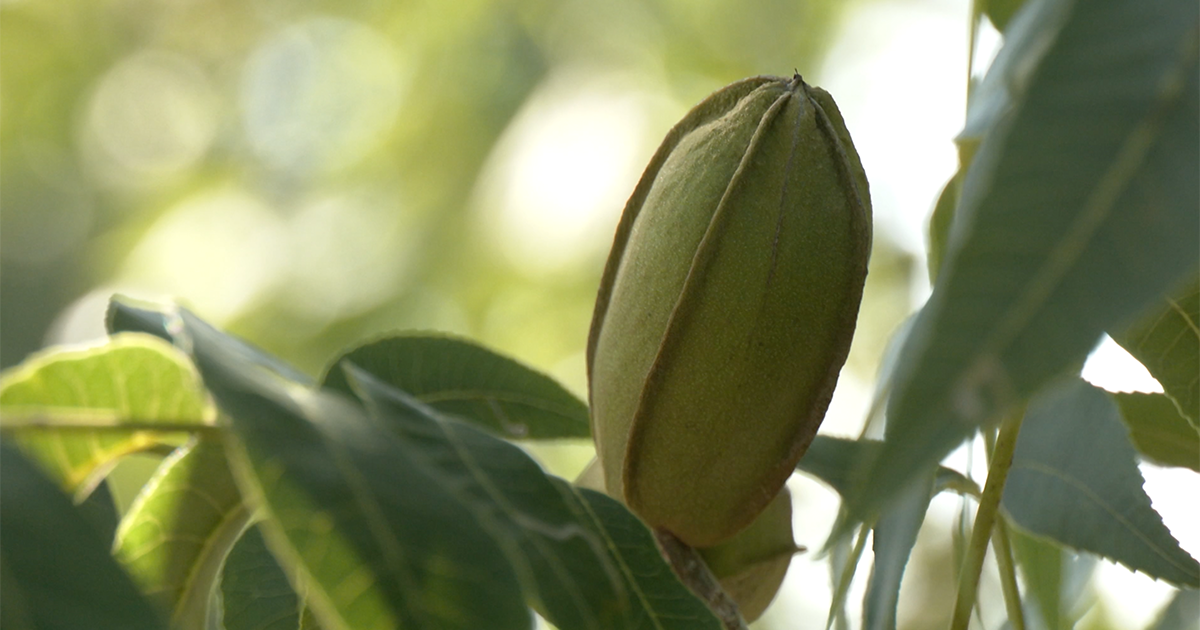
“Some of the thinner shelled varieties are susceptible to splitting,” he says. “Most of the time, that split will occur inside the shuck. But when it happens very quickly, and you get a really heavy influx of rain that the tree sucks up fast, it can actually cause splitting or rupture of that shuck on the outside.”
Ironically, the same rain that caused so many issues earlier in the season is now something growers are hoping for. That’s because the final stages of nut development require plenty of water—whether from the skies or from supplemental irrigation.
“We’re right here at the tail end of it,” says Wells. “Once the shell’s hardened, they start to fill the kernel in the nut, and that’s a high energy demand process for the tree. It takes a lot of water.”
Despite everything, there’s cautious optimism. While it’s not expected to be a bumper crop, growers are seeing better-than-expected yields thanks in part to younger trees coming into maturity.
“This year’s crop looks decent. It’s actually a little better than expected after that storm,” Wells says. “A lot of our old Stuart trees, which still make up a good bit of our acreage in the state, they’re pretty off this year. But we’ve got a lot of younger trees coming in, and that’s kind of offsetting some of that.”
With harvest just around the corner, growers are hoping a strong finish can help salvage a challenging season.
By: Damon Jones