
Kennesaw, GA |
The future of farming is taking shape at Kennesaw State University, where cutting-edge technology is being tested and implemented through the PLOT Innovation Hub — a 25-acre research and teaching facility designed to explore smarter, more sustainable ways to produce food.
At the heart of the initiative is a collaborative effort to bring together multiple disciplines and redefine how agriculture and technology intersect.
“The Prototype Living of Tomorrow initiative is a unique initiative,” said Chris Voicu, PLOT Initiative Lead at KSU. “It’s bringing together different faculties to work collaboratively on intelligent systems — things like robotic systems for agriculture, autonomous logistics, and even technologies that help people interact with their homes and environment in a seamless way.”
Making Farming More Accessible
One of the primary goals of the PLOT Innovation Hub is to create more efficient and accessible ways to grow food — particularly for those looking to enter the industry.
“The biggest barrier to entry for most young farmers now is property cost,” said Michael Blackwell, PLOT Field Station Director. “With smaller, controlled systems like what we’re working on, you can scale down your footprint and your costs. And because of automation, labor costs go down dramatically as well.”
By reducing both startup and operating expenses, these systems could open the door for a new generation of producers.
Predictability in an Unpredictable Industry
Traditional farming often comes with a long list of variables — weather, soil conditions, and pests — all of which can impact yields. But controlled environments like those being developed at KSU offer a more predictable approach.
“It’s the possibility of a predictive yield,” Blackwell explained. “If I can tell someone they can produce two thousand heads of lettuce per week, every one of them eight ounces for fifty weeks out of the year, that allows them to build a business plan.”
That level of consistency could be a game-changer for producers looking to stabilize their operations and reduce risk.
Robotics Leading the Way
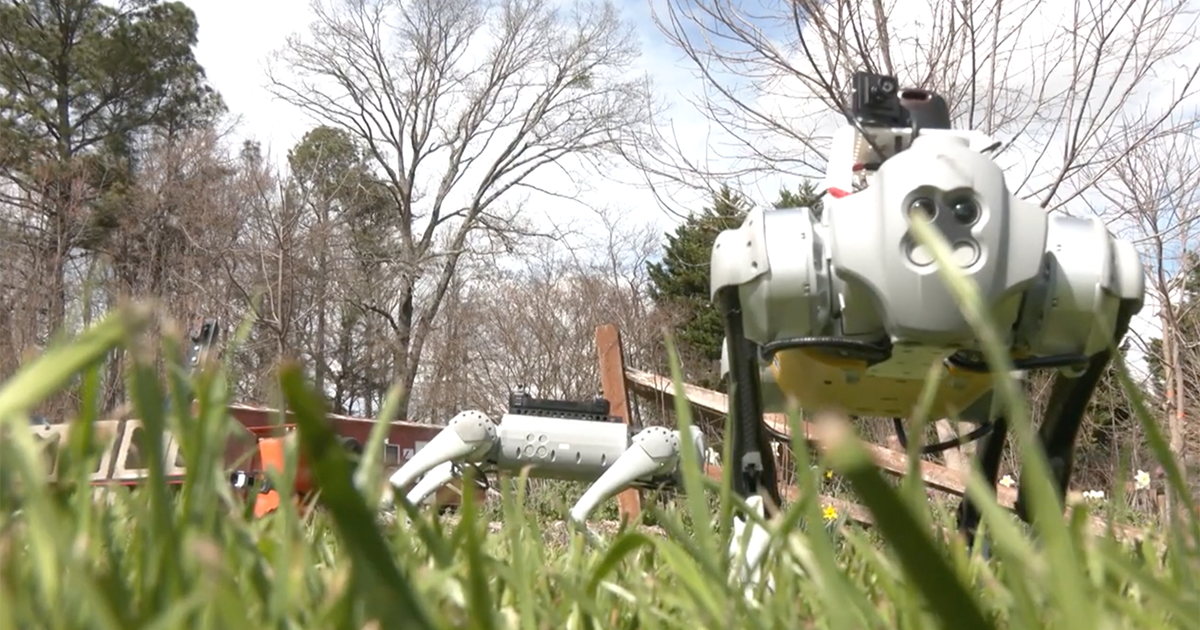
With labor costs continuing to rise, robotics are emerging as a potential solution to one of agriculture’s biggest expenses. At the PLOT Innovation Hub, researchers are already testing a variety of robotic applications in the field.
“Robotics have two main roles,” Voicu said. “One is automation — interacting with the environment and even harvesting. The other is sensing — collecting data about the environment and the crops.”
Some of that technology includes robotic systems capable of scanning fields, analyzing crop health, and even creating digital models of entire growing environments.
“We have a robotic system that walks through the field, captures images and depth data, and evaluates the quality of the produce,” Voicu said. “From there, you can create a digital twin — a virtual version of the field — that allows you to monitor everything remotely.”
Looking Ahead
While the innovation hub is already making strides, researchers say this is just the beginning. The program is set for a public launch in early April, with plans to expand into even more advanced controlled environments.
“For the next phase, we’re looking at fully controlled systems — temperature, water, energy — all operating autonomously,” Voicu said. “We want to develop a whole new structure that takes these ideas even further.”
As agriculture continues to evolve, initiatives like the PLOT Innovation Hub are helping pave the way — blending technology and tradition to create a more efficient, sustainable future for farming.
By: Damon Jones