
Midville, GA |
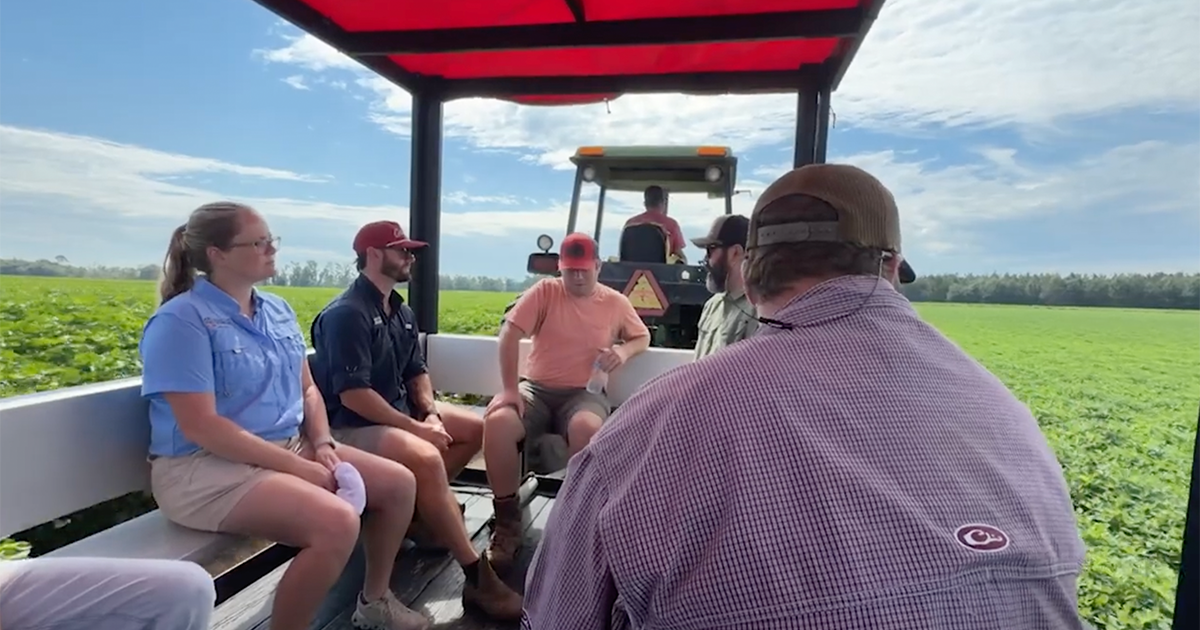
There was plenty for producers to hear and see at this year’s Midville Field Day — a valuable opportunity for growers across Southeast Georgia to hear directly from experts on everything related to crop production. And with one of the most unpredictable growing seasons in recent memory still unfolding, the timing couldn’t have been better.
“The things going on here are applicable to this area and our growers in this area. This gives them a chance to access whatever work is being done here and see it in real time,” said Anthony Black, Superintendent of the UGA Southeast Research and Education Center. “Everyone knows the kind of economic times we’re in with production agriculture, and I hope there’s something here today that helps them maintain and be sustainable.”
That economic backdrop has made getting the 2026 season right more critical than ever. For cotton producers, the year has been anything but straightforward — swinging from one extreme to the other before most fields even reached full canopy.
“It’s been a tale of three seasons so far, which is crazy. We started off this spring extremely, extremely dry — we were starting to get concerned we’d struggle to get the crop planted and get a good stand,” said Camp Hand, UGA Extension Cotton Specialist. “Then in May it started raining and really didn’t stop. So we were scared on the front end we wouldn’t get planted because it was so dry — and then it started raining so much that people didn’t really finish planting because it was so wet. It’s been a weird year so far, but overall the cotton looks good. USDA has us at ninety-two percent fair or better right now — but I do think the crop is average.”
The story is similar for peanuts — a season of ups and downs — though according to UGA Extension Peanut Agronomist Scott Monfort, 2026 is shaping up better than either of the last two years.
“The last two years we had a severe drought between June and July — four to five weeks without any rain all over the state, plus ninety-four-plus degree temperatures,” Monfort said. “This year we’ve had a couple of dry spells, but for the most part we’ve had rain all over the state. It’s just been spotty. I can take you anywhere in any county in the state and we can probably find very dry peanuts and very good-looking peanuts right next to each other. In situations where we’re a little dry but not overly dry and we’ve got irrigation, a lot of times that’s when we make some of our best yields.”
Still, Monfort says the finish line is in sight — but there’s still significant work ahead to get the peanut crop through to harvest.
“I think we’ll make a good crop. When I say we look pretty good, I mean we’re looking good for a solid average crop — good quality, and I think our state average should come in above the four thousand-pound range,” Monfort said. “We’re still going to have some problems — we always do. But we’ve got a long road in the next four weeks to get to the finish line.”
For Southeast Georgia’s producers, the Midville Field Day served as a timely reminder that even in a challenging year, knowledge and preparation are still among the most powerful tools available — and often the difference between an average crop and a good one.