
Brinson, GA |
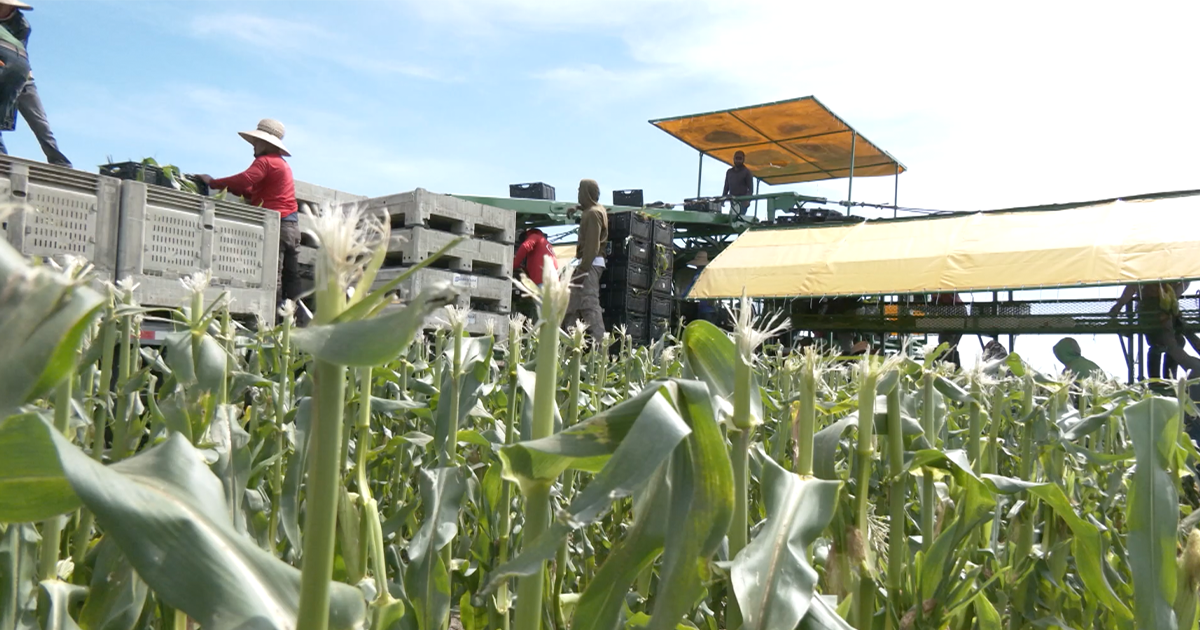
Southwest Georgia is home to more than eighty percent of the state’s sweet corn production — and right now, those fields are turning gold. Despite a late freeze putting a small dent in early yields, harvest is in full swing and growers say the crop has largely recovered.
“So far, it’s a really good crop. We had a little bit of frost damage at the beginning, but it’s straightened out and is really yielding well,” said Glenn Heard, a Decatur County sweet corn grower. “We have a good climate for sweet corn, and we can ship it all over the country.”
While the warm climate and fertile soil make Southwest Georgia ideal for sweet corn production, disease pressure and pests are a constant concern — and one that makes this crop considerably more expensive to produce than field corn.
“By virtue mostly of insects, it is hard. We have to control them the best we can, and we put a lot more inputs into sweet corn because of the insect side compared to field corn,” Heard said.
Those costs have climbed even higher this year, with energy prices jumping nearly twenty percent since February. For growers in South Georgia’s sandy soils, fertilizer is already a significant expense — and the recent price increases have made a tough situation tougher.
“With our sandy land in South Georgia, we use a lot of fertilizer — probably more than anywhere else. So the fertilizer was certainly a shock, and so was the fuel. We’re just trying to muddle through it the best we can,” Heard said.
Not all the news on the cost front has been bad, however. Recent changes to the H-2A worker visa program have provided some relief on one of the farm’s biggest line items — labor.
“We use a lot of H-2A in harvesting, some in the shed, and now some on our tractors and equipment. We were getting strangled by increases every year in the prevailing wage rate — and that has stopped. That has helped a lot,” Heard said.
Unlike field corn, which primarily goes into livestock feed, sweet corn is grown specifically for people to eat — and that distinction makes timing absolutely critical. The window between peak flavor and spoilage is narrow, and every step of the harvest process has to move quickly.
“We hand harvest — pretty much all the sweet corn in our area is hand harvested. We have to keep it really cool and ship it real soon because it has a certain shelf life. We have to get it to the consumer on time,” Heard said.
For Southwest Georgia’s sweet corn growers, this season is shaping up to be a solid one — even if getting there has required navigating higher costs, pest pressure, and an early frost that tested their resilience before the first ear was ever picked.