
Nashville, GA |
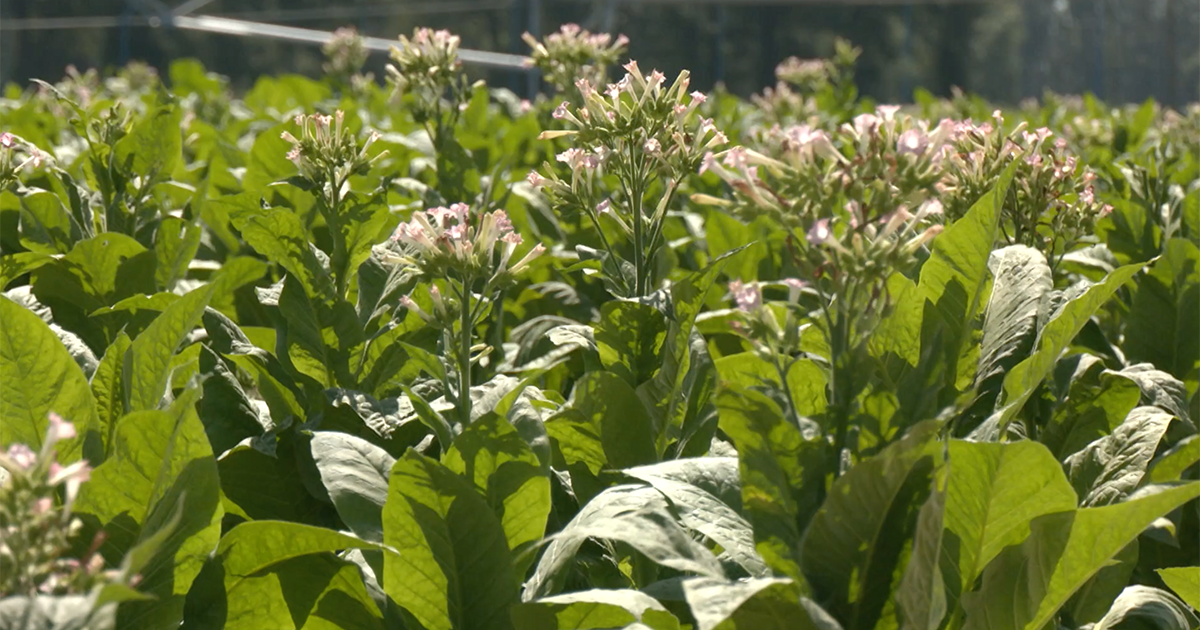
Despite a dramatic decline in the number of growers over the past quarter century, tobacco remains an important crop across parts of South Georgia. And with planting season quickly approaching, producers recently gathered in Berrien County for a production meeting aimed at helping them prepare for the year ahead.
The event provided growers with the latest recommendations on pest control, varieties, and fertility management — tools that can make a significant difference when profit margins are tight.
“Every dollar counts,” said Ben Reeves, Berrien County Extension Agriculture Agent. “We want to make sure we’re giving the best pesticide recommendations, variety recommendations, and fertility recommendations that we can. So, this is a good opportunity for a general update on production practices before everything gets rolling.”
Rising Costs Continue to Challenge Growers
Like many row crop producers across Georgia, tobacco farmers faced significant challenges in 2025. One of the biggest concerns continues to be the rising cost of production.
“We have growers that have quit simply because they could not pay the labor that was involved in harvesting their crop,” said J. Michael Moore, Extension Tobacco Agronomist with the University of Georgia. “So labor is a very big issue. Generally, the cost of production for everything — pesticides and seed — is also high.”
Those financial pressures have forced some producers to reconsider whether tobacco remains viable on their operations.
Disease Pressure Adds Another Layer of Concern
In addition to rising costs, disease pressure also took a significant toll on the 2025 crop. One of the most damaging was Tomato Spotted Wilt Virus, which affected a large percentage of plants.
“We suffered high levels of Tomato Spotted Wilt Virus,” Moore said. “About thirty-five percent of the plants had symptoms. And even if it only converted into half that as far as yield loss, seventeen-and-a-half percent yield loss is significant.”
Another persistent threat is black shank, a soil-borne disease that can remain active in fields for years.
“Black shank is another disease that has long soil persistence,” Reeves explained. “There are some fields that have been in historical tobacco production where, if you don’t use chemicals, it can be devastating as well. But the chemicals are expensive.”
Potential New Tool for Disease Control
Researchers are currently evaluating a new option that could help growers combat disease pressure in future seasons. Extension specialists have submitted an application to the Environmental Protection Agency for a Section 18 label that would allow the fungicide Excalia to be used on tobacco.
“We have an application in with EPA for a Section 18 label for Excalia,” Moore said. “It’s a fungicide that’s used in peanuts in Georgia and other states. We’re tagging on to the application from NC State. We’re looking forward to EPA positively evaluating this label and hopefully we’ll get that label in time to assist us in having one more chemical for target spot control.”
An Industry That Still Supports Rural Communities
Even as the number of growers has declined, tobacco continues to play an important economic role in the communities where it is produced.
“Tobacco pays the bills for tobacco growers,” Moore said. “They pay bills in town when they buy fuel, when they buy clothing for the kids for school, when they buy groceries all year round. So in those communities it’s very, very important and significant.”
As growers prepare for another season filled with uncertainty, meetings like this one help ensure they have the information needed to make informed decisions — and hopefully keep tobacco a viable crop for South Georgia.
By: Damon Jones