
Watkinsville, GA |
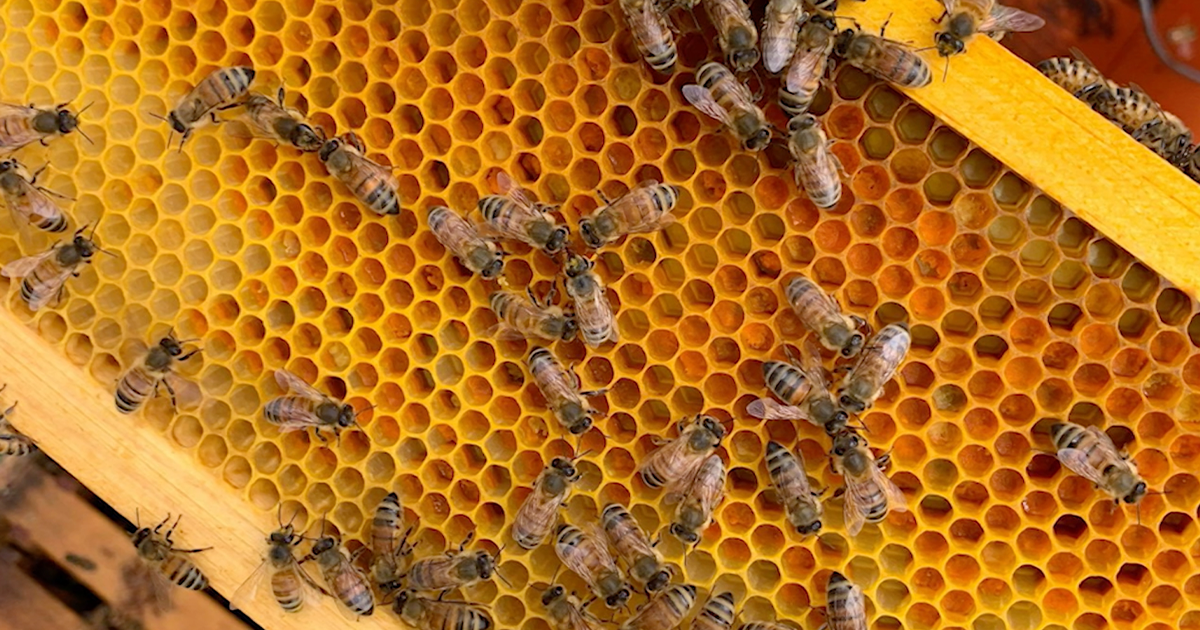
They may be small, but honeybees are responsible for pollinating billions of dollars’ worth of crops across the country every year — and Georgia has long been at the center of the supply chain that keeps those bees moving and the crops that depend on them thriving.
“Georgia historically was the largest beekeeping state in the Union. We only very recently were overtaken by California and Texas, but we still prop up a large amount of the beekeeping across all of North America,” said Lewis Bartlett, Assistant Professor in Honeybee Health and Pollinators at the University of Georgia. “Because we can raise honeybees here much earlier in the year, they can go up to places like Maine, other parts of New England, Canada, the central prairies, even California — and pollinate crops there in large colony sizes that otherwise wouldn’t be possible in those local environments.”
That supply of honeybees, however, isn’t guaranteed. In recent years, colony losses have reached alarming levels — with consequences that extend far beyond the hive.
“In very severe years, as we saw one or two years ago, we can lose as many as fifty to sixty percent of the commercial honeybee population in the U.S. That’s a massive loss, particularly when certain commodity crops that are very valuable to U.S. agriculture rely on very large numbers of colonies being brought in to allow pollination to happen,” Bartlett said. “And it’s not just the number of colonies — it’s the size of those colonies. We’re not just looking to have as many honeybee colonies in the U.S. as possible. We need them to meet some minimum standard in size and ability, so that when they’re deployed in these crop scenarios, they’re actually able to do the job we’re charging them with.”
Among the biggest drivers of those losses are diseases and parasites. In Georgia, one of the most notable culprits is the small hive beetle — a deceptively clever pest that has proven particularly difficult to manage in the Southeast’s warm, humid climate.
“It’s a rather intrepid small beetle that comes into the colonies, sneaks in through the cracks, and actually imitates and mimics the bees — begging them for food and tricking them into thinking it needs to be taken care of,” Bartlett explained. “They then lay their eggs in the colony, and those larvae — maggots, essentially — will ruin an entire honeybee colony by burrowing through and causing the honey to ferment. It causes the colony to become very slimy and will kill them outright. That’s a particularly challenging problem here in the Southeast, where it’s warm and humid and very permissive for this specific sort of beetle.”
That’s where Bartlett and his team at UGA’s bee health research lab come in. Working at scales ranging from individual insects to hundreds of colonies at a time, their research is focused on understanding what threatens honeybee health — and what can be done about it.
“We investigate how infectious diseases affect these animals in these colonies — everything from large field studies at the apiary where we’re physically going into colonies, counting the numbers of parasites, assessing how many bees are in there, how many baby bees they’re able to raise, the overall health of the colony,” Bartlett said. “All the way through to bringing individual bees into the laboratory, where we take samples and are able to quantify just how much virus they have, and test all sorts of aspects of their behavior and their response to certain challenges.”
For Georgia’s farmers and the broader agricultural supply chain that depends on healthy pollinators, the work being done in Watkinsville couldn’t be more critical — or more timely.