
Bulloch County Farmer Will Anderson’s Story Is One of Endurance, Faith, and Family

Register, GA |

At first glance, Will Anderson’s farming operation looks like a lot of South Georgia farms. There’s cotton, peanuts, poultry houses, and long hours trying to keep everything moving. But spend a day with him here in Register, and it becomes clear there’s a lot more riding on this farm than just this year’s crop.

“We farm mainly cotton and peanuts, a little bit of corn. We’ve got eight broiler houses with Claxton Poultry. I’m also a quarter owner in Candler Peanut — we buy for Golden Peanut, do processing for them, and sell CPI peanut seed,” said Anderson, a Bulloch County row crop farmer.

RECOGNITION, AND A LITTLE DISCOMFORT

It’s the kind of operation that takes years to build — and recently it’s earned Anderson recognition, including stewardship honors and awards within the peanut industry. But for him, the attention still feels a little uncomfortable.

“We try to take care of the land like we’re supposed to — do soil samples, do a good job raising chickens,” Anderson said. “There have been a lot of good growers, a lot better than me, who’ve gotten that award over the years. It was an honor to get it.”

A FAMILY FARM TESTED EARLY

The humility makes more sense once you understand the road it took to get here. Anderson comes from a multi-generational farm family built through years of hard work — and eventually, hard times. His father returned home after college to farm, but was later diagnosed with multiple sclerosis at a young age. As his health declined, Will found himself stepping into a much bigger role far sooner than expected.

“He started getting sick physically pretty bad when I was probably 18 or 19. You could tell he physically couldn’t do what he needed to do on the farm,” Anderson said. “And during that time — that was in the late nineties — it was a really bad time to farm. Three or four years of consecutive drought and low prices.”

For many operations, that kind of combination is devastating. Low commodity prices, bad weather, and a family health crisis all hitting at once. But somehow, the farm kept going.

“I reckon it goes back to your relationship with the Lord. If he wants you to keep doing it, you’ll keep doing it,” Anderson said. “I’m old enough now to look back and see where times were pretty rough and you came out of it — whether through commodity prices changing or just good yields. Things can change pretty quickly in farming. Cotton was 64 cents three months ago and now it’s 85 cents. That’s how fast it moves. It honestly needs to be about 95 cents, but I think you can look back and see that things can change. Right now though, it’s pretty bad. Our inputs are just too high.”

THE NEXT GENERATION

Even as technology continues to change the way farmers operate, Anderson says the mission really hasn’t changed much at all — keep the farm moving forward, and hopefully create an opportunity for the next generation to do the same.

“My son graduated from high school a couple years ago, and that’s all he’d ever wanted to do. He’s back here now, so hopefully that gives you a little pump — we can keep going and make it work,” Anderson said.

Which may be why, after all the years, all the pressure, and all the uncertainty that comes with farming, the thing Anderson sounds most proud of isn’t an award. It’s endurance.

“There are a lot of good farmers that are not still in business. I’m proud that we’re still moving in the right direction, and I’m proud that my son has been able to come back,” he said. “Whenever you can keep going, it’s a blessing.”

GIVING BACK TO THE INDUSTRY

Beyond his own operation, Anderson serves in a number of agricultural leadership roles across the state, including the Georgia Conservation Tillage Alliance, where he continues to advocate for conservation and research-based farming practices — carrying the same commitment to stewardship that has defined his farm for generations.
Feral Hogs Cost Georgia Farmers $150 Million a Year — and Populations Are Still Growing

Social Circle, GA |

They cause an estimated $150 million in damage to Georgia agriculture every year — destroying crops, tearing up land, and wrecking equipment. And despite ongoing control efforts, feral hogs aren’t going anywhere. If anything, their populations are growing.

“Feral hogs cause a tremendous amount of damage, especially for agricultural producers. They destroy row crops, root up the ground, and can cause damage to equipment — it’s an ongoing, perpetual problem that we’ve had for really centuries,” said Charlie Killmaster, Wildlife Biologist with the Georgia Department of Natural Resources. “They reproduce especially well. They can drop multiple litters a year with a lot of young in each litter, and those young have a really high survival rate. That reproduction outpaces the harvest in a lot of cases.”

PROGRAMS AND RESOURCES

Because of that, feral hogs remain a top priority for agricultural and wildlife departments across the state — and collaborative efforts are expanding to give growers more tools to fight back.

“For years, we’ve been actively working on removing regulations and restrictions on hunting and controlling feral hogs,” Killmaster said. “We’re also running the Hogs Down Awards program, where we’re giving away highly efficient hog traps to people who are actively out there controlling hogs on a quarterly basis. And we’re offering technical guidance through various workshops to teach people how to effectively trap and remove feral hogs.”

NEW LEGISLATION CUTS RED TAPE

State legislators have also taken notice, with recently passed legislation making it easier to control feral hog populations on private lands.

“House Bill 946 legalizes the use of drones for searching for feral hogs to aid control efforts, which will help us gain some efficiency there,” Killmaster said. “It also legalizes hunting from a vehicle on private property and on private roads — not from a public road. That was previously allowed through a permit, but this removes that permit requirement. It also clarifies the licensing requirements, making clear that you do not need a hunting or trapping license in order to trap feral hogs.”

ACT NOW, BEFORE THE SEASON TURNS

With seeds already in the ground for some of the most vulnerable crops — including peanuts and corn — growers should be on high alert for feral hog activity. But according to Killmaster, the best time to address the problem has already passed, which means getting ahead of it before next winter is critical.

“It’s best to do it in the dead of winter when there’s not a lot of natural food out there. They respond really well to bait in the trap, and that’s the time to get to them,” Killmaster said. “Once there’s spring green up and crops growing, they are really hard to bait and get coming into a trap.”

For Georgia’s agricultural producers, staying proactive — through trapping, reporting, and taking advantage of new programs and legal tools — remains the most effective defense against one of the state’s most persistent and costly invasive species.

Field Day Provides Crop, Research Updates

Tifton, GA |

In Tifton recently, producers got an up close and personal look at the latest cotton and peanut research. It’s an event that’s an important one for producers as they get to see firsthand the important, grower funded work that’s being done that will keep the industry successful for years to come.

“We’re all in need of new information. Certainly in a trying times that we’ve got economically on the farm. We need to know the latest and the greatest, and of course, some of the stuff really won’t be available for commercial production for several years, but it’s good to have an idea of what our researchers are doing. The other side of it is it gives us a firsthand look at what our researchers are doing, the effort, the information and work that they’re putting in to get these improvements in our growing process and it just makes you feel good about how our research dollars are being spent,” says Joe Boddiford, Chairman of the Georgia Peanut Commission.

Of course, another important aspect of the event is getting to hear updates from experts on this year’s crop. This year was of course a rough one from the start as producers had a hard time even getting the crop planted, which according to UGA’s Scott Monfort, has now delayed most of this year’s peanut crop.

“Overall this year has progressed to be a pretty decent year. Every year, we have a lot of bumps and bruises to get to where we’re at today. We had a lot of rainfall in May that pushed our planting season back 2 to 3 weeks. So, a lot of our acres were planted last week of May going into June. Then we went from being extremely wet to extremely hot and dry in June. So, we fought some things to get this crop up and going,” says Extension Peanut Agronomist, Scott Montfort.

Since getting it up and going, producers have still had a challenging time, as the weather has caused a number of disease issues for peanut producers.

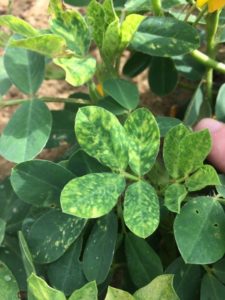
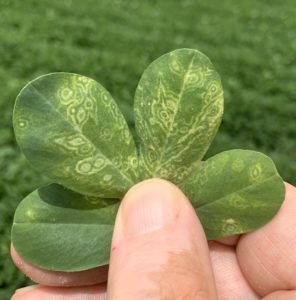
“Problem we face this year has been tomato spotted wilt virus. It will be a problem every single year, but growers need to look in their fields now. More spotted wilt than you want? What could you have done earlier to do it? Leaf spot diseases are always a problem for Georgia’s peanut farmers, always; but this year they’ve been a little bit slow to develop. I think that that warm, dry weather we had mid-season kind of was a restart button for this disease. Now growers are facing leaf spot diseases. They need to take an opportunity to manage them, but I think it’s been a little slow. The disease that’s been number one issue for us and certainly environmentally driven has been part of that has been white mold. White mold flourishes when we have warm, moist, humid nighttime temperatures. We’ve had that even when we’re not getting rain. If we have heat, if we have warm days, it can be,” says Bob Kemerait, Extension Plant Pathologist.

Monfort says that the rollercoaster of weather has continued to be a trend all throughout the growing season, as even now, dryland peanuts are suffering from the lack of rain. However, he says despite that, the crop could still turn out to be a decent one.

“The dryland crop is struggling. That’s around 49 percent of our crop is dryland. We had a lot more irrigated this time. And so that’s the one that I’m really concerned about as far as how is that going to fare out. I think it’s, it’s a good, maybe slightly above average crop,” says Monfort.

By: John Holcomb

Georgia Federal-State Inspection Service’s Important Role within the Peanut Industry

Ty Ty, GA |

Each Fall, all across the state, peanuts are dug up, harvested, and taken to buying points that will shell them and market them to their final destination. However, an important part of that process is what’s called grading, which is completed by the Georgia Federal-State Inspection service, that ensures both the grower and shellers receive a non-biased grade that’s used to make sure all parties get compensated fairly.

“We’re an organization founded in 1927 to be a non-biased third party between the buyer and the producer. Mostly in Georgia it’s peanuts, but it’s different commodities also. What we really do is we ensure that the buyer isn’t paying too much for the peanuts and the producer is getting a fair amount for the peanuts as well. So, our organization doesn’t lean toward one side or the other. We’re here to be a nonbiased party,” says Willie Musselwhite, District Manager for the GA Federal-State Inspection Service.

According to Musselwhite, the job is one that’s taken very seriously, as they strive for uniformity so that it’s an equal playing field for everyone, which is why when they take samples from each truck, they work it in a very methodical way to ensure it’s done properly and consistently.

“To the farmer, he wants to get paid. He worked very hard to produce this product and he wants to get paid the ultimate price for his profit. So, once we are going in there and determine the grade, it really determines how much the farmer’s getting paid for his peanuts. So, if it grades really high, he wants a premium grade for his peanuts, but on the other hand, if it were to grade a lower grade, the buyer would not want to pay that premium price for it. So, what we’re doing is we’re telling the farmer, and the buyer; this this is what you have. We don’t set the prices for them, USDA and the buyers, they set the prices, but whatever grade it has that determines the price on the peanut,” says Musselwhite.

Musselwhite says that the grading process is also important because it can help further improve peanut production here in Georgia as it gives researchers, breeders, and growers information that can be useful in the future.

“Georgia produces technically 50 percent of nation’s peanuts and we strive every year to produce different varieties; University of Georgia, yield better yields and make higher quality peanuts. So, we do the research through grading, different trials and all that they’re trying to make a better product. Because after a while, the problems you have now, it fails to grade what it was . We’re always having different things come out the university system and different geneticists are making it happen. It’s very important for the peanut industry to have to have somebody doing that because it’ll provide more income for the farmers in the long run and a better quality peanut for the shellers, the candymakers, and the industry in general,” says Musselwhite.

By: John Holcomb

Annual Peanut Farm Show Provides Growers with Insight

Tifton, GA |

For almost five decades, peanut growers in Georgia have convened at the Georgia Peanut Farm Show – an annual event facilitating fellowship among producers, showcasing cutting-edge equipment, and providing updates from industry experts.

“We always see new challenges on the farm and there’s always some new technology and maybe new ways of doing the same things. So, we get this to look at maybe new planters or updated harvest machinery. And so, it’s always an opportunity for us to think about how we’re doing things and maybe there’s some changes we would like to make to our own production system. It’s a really good opportunity to just see what’s out there,” expressed Donald Chase, Vice Chairman of the GA Peanut Commission.

In addition to networking with vendors and exploring new equipment, attendees participated in production seminars led by industry experts like Scott Monfort, an Extension Peanut Agronomist at the University of Georgia. Monfort addressed the tumultuous year for growers, highlighting the detrimental impact of weather fluctuations on crop yields.

“Unfortunately, if we get into a situation with a disease problem or insect problem, yeah, they might have done some damage, but we can get in there and correct that pretty quick and it wouldn’t hurt as much, but when you’re talking about the weather and its impact on the overall growth and productivity of the plant, you really don’t see that as a whole until you start digging. It’s not uncommon for us to see that in a small geographic location, but not across the whole state,” explained Monfort.

The adverse growing conditions led to a challenging harvest season, as Monfort noted grading issues stemming from the erratic weather patterns witnessed statewide.

“Not only did non-irrigated get impacted, but our irrigated did too. That’s where we had pods that aborted some of the nuts. We didn’t get them formed. They didn’t fill out all the way to the hull. So, we get smaller peanuts. Dry land didn’t produce much at all in some areas. So it just just compounded on us and then this whole grade issue was with what happened in May, then what happened in June and July. If we would have stayed hot in late August going into September and October, we could have corrected some of that because the plant could have really put on a lot of pods and matured them out, but we didn’t, we cooled off. So that hit us again,” Monfort elaborated.

Bob Kemerait, Extension Plant Pathologist at UGA, emphasized the significant role of disease pressure alongside unfavorable weather conditions.

“The yields that came off of last year were disappointing to a lot of growers. We weren’t at the top; it wasn’t a terrible year, but we weren’t the best. Some of the things that affected that was tomato spotted wilt virus and also white mold. So, a lot of that was environmentally driven. The hot, dry weather made the white mold worse, especially for farmers with non-irrigated fields. Also, our tomato spotted wilt virus, based upon some of the early situations in the 2023 crop was more severe, and so in part, the disappointing yield was not just the growing season, but it was growing season in concert with things like tomato spotted wilt virus and white mold,” Kemerait explained.

By: John Holcomb

46th Peanut Farm Show Educates Producers on Devastating Disease

Tifton, GA

For the past forty-six years, peanut growers here in Georgia have made their way to the Georgia Peanut Farm Show – a yearly event that gives producers the chance to fellowship with one another, see the latest and greatest equipment, and hear updates from experts on the industry.

“It’s just a great, information sharing show here for peanut growers and peanut representatives. Those who quit learning, quit growing, and certainly in today’s technological age and the environmental concerns that we have, there’s new information, there are changes if not every day, certainly every year and we need to update our farmers and keep them as up to date and informed as we can about issues and new products that are coming up, so that we can continue to be profitable in the industry we all love,” says Joe Boddiford, Chairman of the Georgia Peanut Commission.

Aside from getting to meet with vendors and see the newest equipment, producers also got to attend production seminars in which industry experts, like Bob Kemerait, an Extension Plant Pathologist with the University of Georgia, spoke about a devastating disease many growers dealt with this past season known as tomato spotted wilt virus.

“The disease caused by tomato spotted wilt virus leads to significant yield reduction,” says Kemerait. “It leads to stunting of the plant, wilting of the plant, and also leads to a much lower pod yield on it, and so if we don’t manage tomato spotted wilt virus it’s very likely that our yields could be off by thousands of pounds, and that’s why it’s so important. We’ve been seeing this virus, tomato spotted wilt virus in peanuts since the mid nineties. The problem in 2022, the 2022 season was it was more severe than it’s been in recent years. It was really, in some fields, was devastating, and we’re not exactly sure why that was but we believe the Winter we had, or didn’t have – it was a warm winter, the impact on the thrips populations, the vectors that transmit the virus may have been a factor, but also because it’s been a few years since our growers have had a really bad year with the disease, they may be becoming a little bit lax, not focusing as much on all the management strategies that they have.”

Kemerait says the importance of having the correct management strategy can’t be overstated, as growers only have one chance to keep the virus under control.

“When they close the furrow, when they move their tractors out of the field, there’s nothing really else they can do to protect the crop, and the UGA Peanut Team works with growers to facilitate the information and also help them understand they get once chance to fight this disease. You either put the right combination down at planting or you don’t. There’s no going back,” says Kemerait.

It’s because of that reason Kemerait says it’s vital producers utilize Peanut RX – a planting tool that will help them minimize the risk of the disease on their operations as they gear up for this upcoming season.

“If you are serious about fighting tomato spotted wilt virus in 2023, you must pay attention to Peanut RX,” says Kemerait. “Peanut RX is available to our growers through a website, peanutrx.org they can also go to our production guides, the University of Georgia extension and they can also get it from various companies as well; following the steps to minimize the risk of this very important disease.”

By: John Holcomb